Whitebark Pine
Whitebark Pine
Couldn't load pickup availability
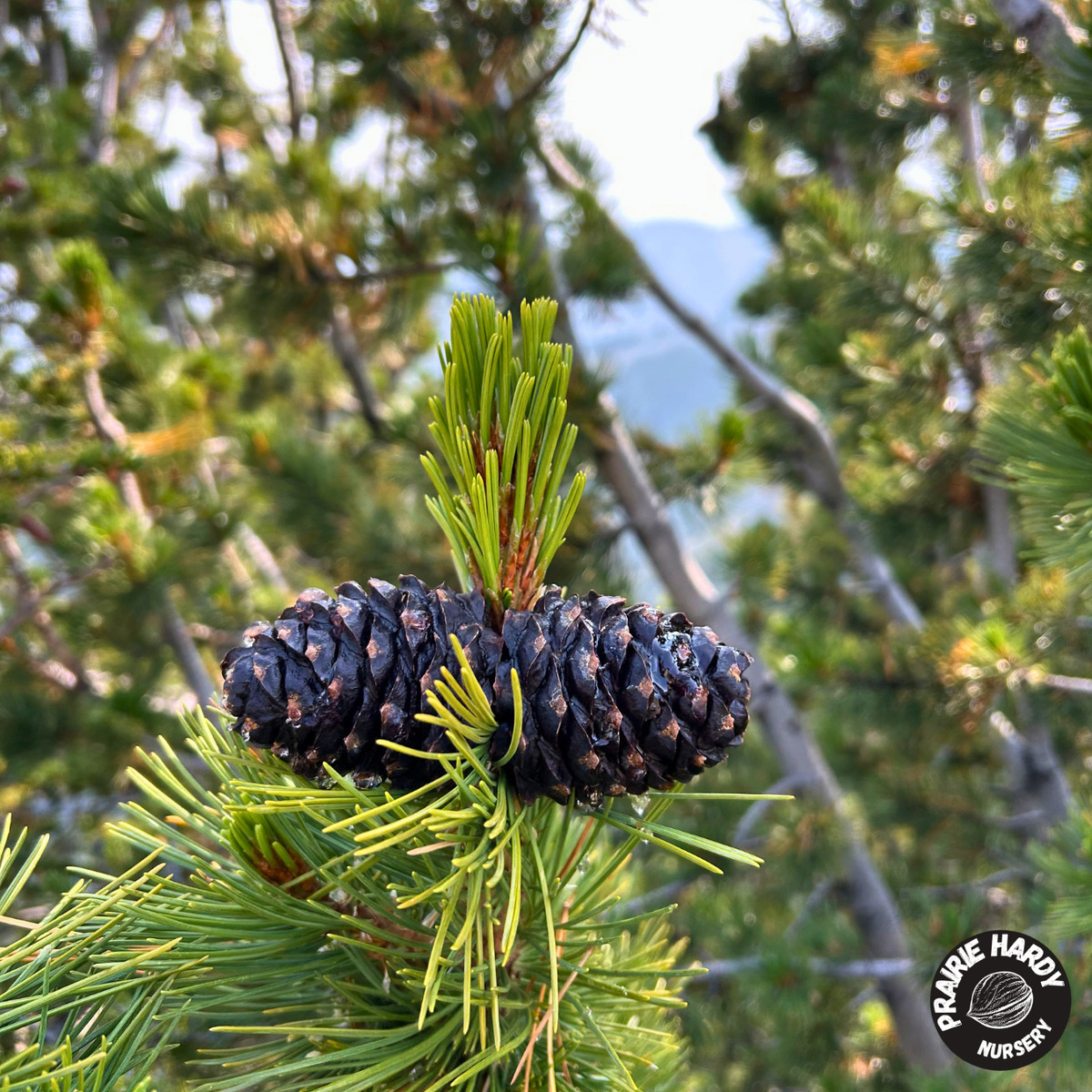
A remarkable native conifer of the Canadian Rockies, the Whitebark Pine is a slow-growing and endangered species adapted to some of the most extreme environments. Found where few other trees can survive, it thrives on exposed ridges and high elevations, growing well in various soil types. The tree is long-lived, growing for several hundred years or more.
Whitebark pine cones are unique because they do not naturally open when mature. The species has a remarkable mutualistic relationship with Clark’s nutcracker, which plays an essential role in seed dispersal and natural regeneration. The nutcracker breaks open the cones, removes the seeds, and caches them in the soil, with many of these forgotten seeds eventually growing into new trees.
Trees typically begin producing cones after 20 years in Zone 3. The seeds (pine nuts) are edible, richly flavoured, measuring approximately 1 cm in size. Each cone produces 20-30 pine nuts and are ready to harvest in September.
Hardiness Zone: 1/2
Height at Maturity: 6 meters (20 feet)
Spread: 4 meters (13 feet)
Soil Preference: Well drained
Light Exposure: Full sun
Pollination: Self-fertile
Latin Name: Pinus albicaulis
Share